
Which is the best training method?
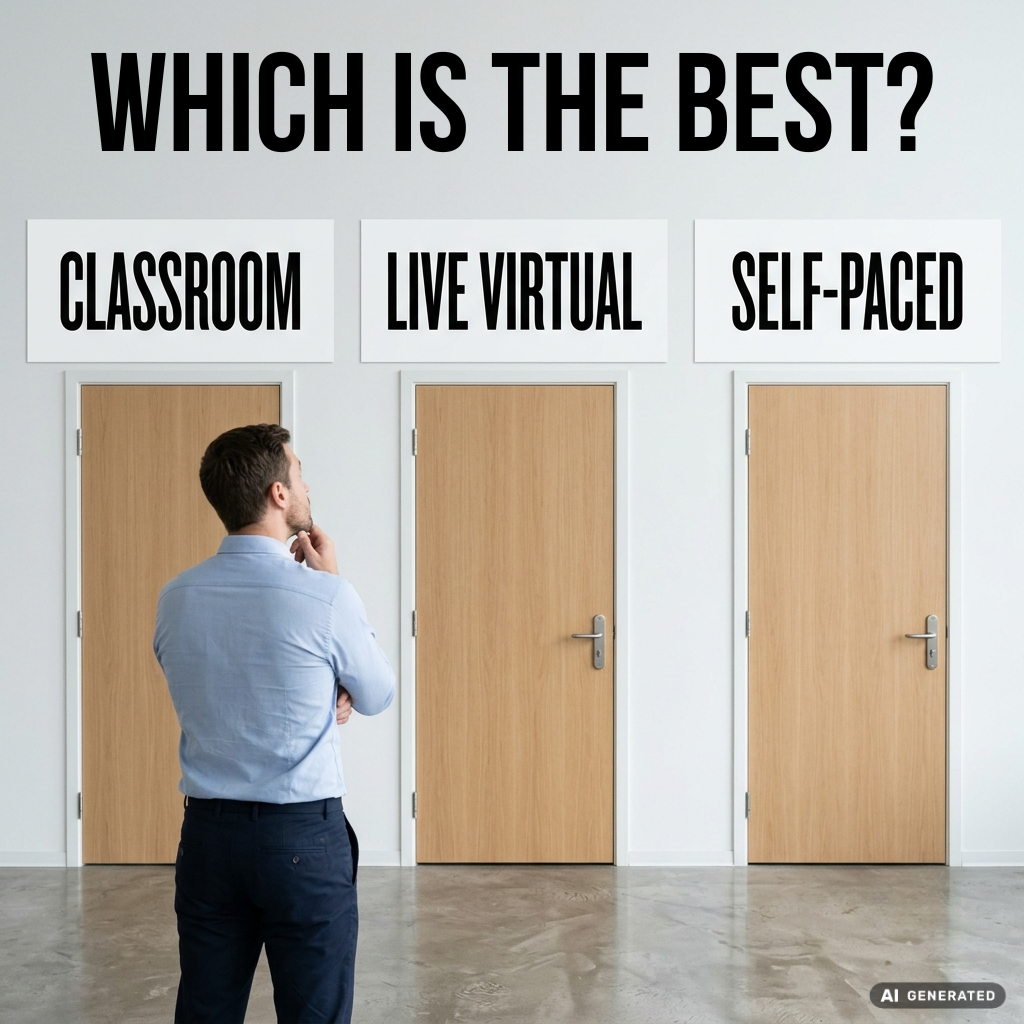
Which is the best training method?
For decades, classroom training was the standard approach to employee development. It is familiar, interactive, and—when well-designed and facilitated—can yield remarkable results. It continues to play a valuable role in building skills in the workplace.
But the world of work has changed. Technology has transformed not only how people work, but also how they learn. Despite these developments, many organizations remain reluctant to embrace digital training formats. To them, these formats are a compromise—a less effective alternative to in-person training—rather than a standalone, legitimate learning solution.
Where Does the Distrust of Digital Formats Come From?
This hesitation is understandable. Many decision-makers have had experiences with poorly designed online courses that offered little more than endless slides, presentations with audio, or documents to download. Such experiences understandably give the impression that online learning simply doesn’t work.
This is precisely where many organizations go wrong. The effectiveness of continuing education depends far less on the delivery method than on the quality of its design, its relevance to the learners’ actual needs, and whether learners are supported in applying what they have learned in their day-to-day work.
The Wrong Question
The question, therefore, is not, “Which training method is the best?” but rather, “Which training method is best suited to this specific learning need?”
Every method has its strengths and limitations. No single teaching approach is ideal for every situation.
Classroom Training: Strengths and Practical Challenges
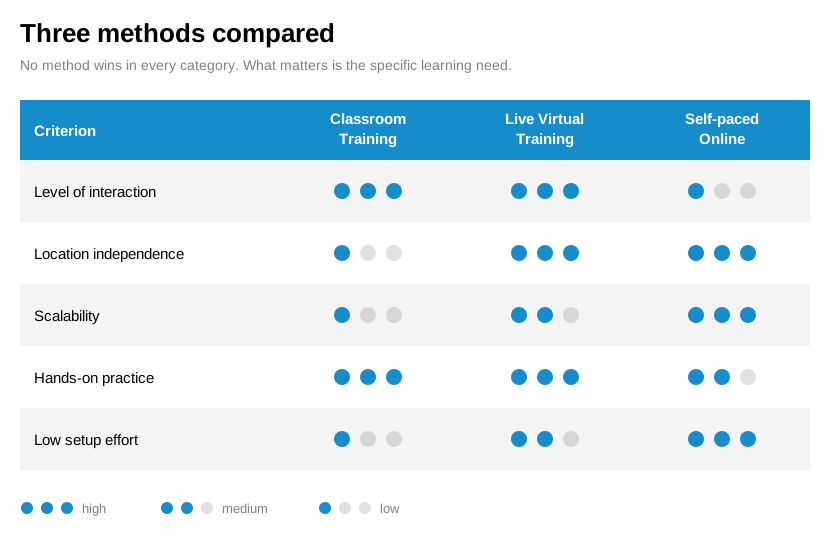
Classroom training provides an environment for in-depth discussions, immediate feedback, collaborative problem-solving, and hands-on practice. It offers clear advantages in any setting where learning relies heavily on interaction, coaching, or group exercises.
However, classroom training also presents practical challenges. Employees must leave their workplaces, and organizations often incur costs for facilities, logistics, travel, lodging, and facilitation. Scheduling for larger groups can also be difficult, especially in situations where operations cannot be easily interrupted.
Live Virtual Training: Instructor-Led, but Without Travel
This is exactly where Live Virtual Training comes in. It is instructor-led training in the true sense of the word: A trainer guides participants through the material, answers questions immediately, observes the participants’ exercises, and steps in when someone gets stuck. The pedagogical core of in-person training is thus preserved. What is eliminated are travel, overnight stays, and the need to be tied to a specific location.
This makes it possible to bring together participants from different locations, countries, and time zones into the same training group. Sessions can be scheduled on shorter notice, groups can be kept smaller, and training can be conducted as the need arises—rather than waiting until enough registrations have been received for an in-person event.
The practice environment doesn't have to end with the training session
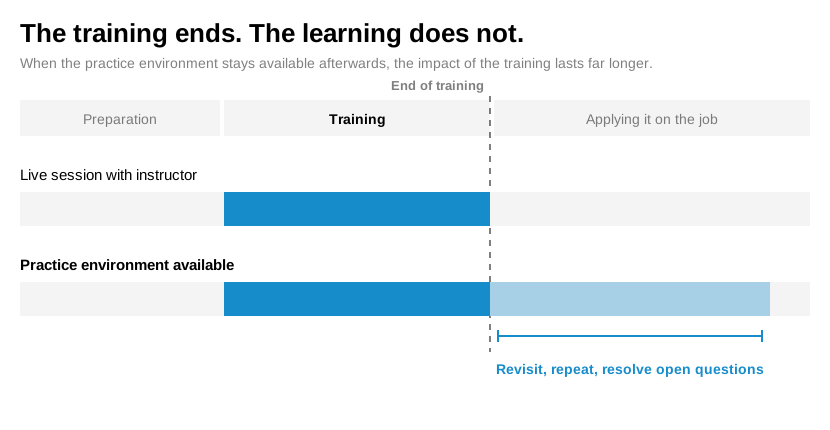
One often-underestimated advantage lies in the training environment. In virtual training sessions, participants work in a prepared environment where they can safely experiment, make mistakes, and repeat processes. This environment doesn’t have to disappear once the training ends. If it remains available for some time afterward, participants can review what they’ve learned at their own pace, clarify any outstanding issues on their own, and make the transition back to their daily work much more confident.
Self-Paced Online Learning: Learning at Your Own Pace
For other learning objectives—particularly those focused on building knowledge, developing practical techniques, or reinforcing job-related skills—a well-designed self-paced online course can be just as effective while offering additional flexibility. Participants learn when it fits into their schedule, can review challenging material as often as needed, and progress at a pace that suits their individual needs. Here, too, learning need not be limited to simply consuming content: a virtual practice environment can also be integrated into self-paced formats. Organizations, in turn, can train significantly more employees without significantly disrupting day-to-day operations.
That doesn’t make digital formats superior. It simply makes them better suited for certain situations.
One of its greatest strengths is flexibility. In a traditional in-person training course, everyone basically moves at the same pace. Some learners struggle to keep up, while others would have been ready to move on long ago. Self-paced online learning eliminates this limitation, and even in live virtual training, dedicated practice environments and individualized assignments allow for much better accommodation of varying levels of prior knowledge.
Another advantage: Learning doesn’t have to stop when the session ends. Participants can revisit lessons, continue working in the practice environment, refresh their knowledge before applying new skills, and reinforce what they’ve learned over time. This opportunity for review and reinforcement can significantly improve retention.
The real measure is not knowledge, but behavior
But retaining knowledge is only part of the story. The true measure of a training program’s success is not what people remember afterward, but how they change their behavior as a result.
Organizations sometimes evaluate training based on participant satisfaction or the teaching method used. While these are useful indicators, the true measure of success is whether performance improves as a result. Are managers leading more effectively? Are sales representatives improving their closing rates? Are service representatives interacting better with customers? Are employees making fewer mistakes? Are business results improving?
These results depend on far more than just the delivery method. Effective learning requires clear goals, relevant content, engaged learners, opportunities to practice, support from leaders, and deliberate follow-up afterward. Without these ingredients, even an excellent in-person program is unlikely to bring about lasting change. When they are present, a well-designed virtual training program can lead to a noticeable improvement in performance.
How Organizations Choose the Right Method
Instead of asking whether classroom training or online learning is better, you should ask:
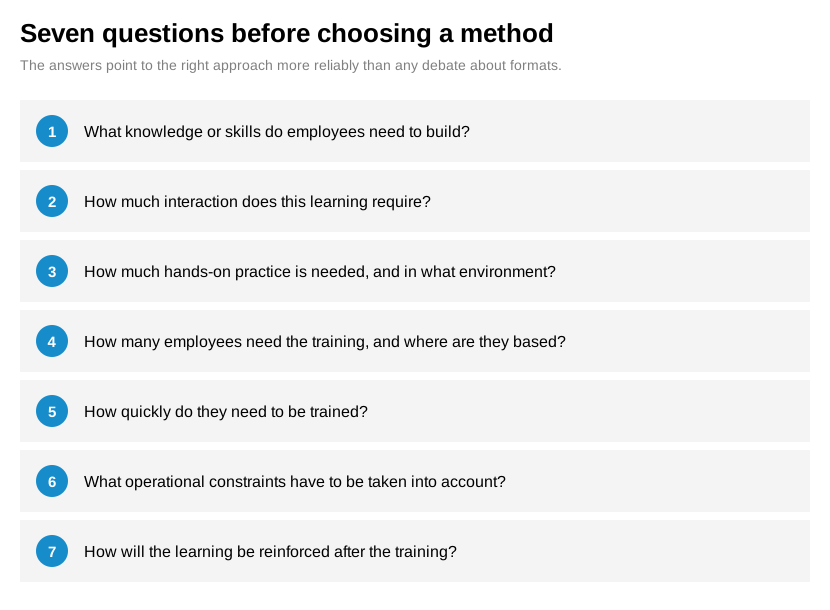
What knowledge or skills do employees need to develop?
How much interaction does this type of learning require?
How much hands-on practice is required, and in what setting does it take place?
How many employees need the training, and where are they located?
How quickly do they need to be trained?
What operational factors need to be taken into account?
How is what was learned reinforced after the training?
The answers usually point to the most appropriate approach. Sometimes it’s classroom training. Sometimes it’s live virtual training. Sometimes it’s self-paced online learning. And increasingly, it’s a well-thought-out combination of all three.
For many organizations, the greatest impact comes not from choosing a single method, but from strategically combining several of them.
Current Trends in Workplace Learning
As workplace learning continues to evolve, organizations are beginning to shift their perspective. Today’s business environment demands continuous competency development, even amid operational pressures, tight schedules, and tighter budgets. Meeting these demands requires more than simply sticking to a particular delivery method. It requires choosing the approach that best fits both the learning objective and the business context.
Classroom training will remain an integral part of corporate learning for many years to come. At the same time, live virtual training and self-paced online learning have emerged as credible, practical, and effective solutions for many learning needs.
The Answer
So what is the best training method?
The answer is surprisingly simple.
They don’t exist.
- Classroom training isn’t always the answer.
- Self-paced online learning isn’t always the answer.
- Live virtual training isn’t always the answer.
The best training method is the one that best suits the learning needs, the learners, and the realities of the company.
The organizations with the highest return on learning are not those that stick to a particular delivery method. They are the ones that choose the approach that best fits the learning objective, the learners, and the realities of the organization.
Ultimately, successful learning isn’t measured by where it takes place or how it’s taught. It’s measured by how people’s behavior changes as a result.